Since Kéa was founded in 2001, we have pursued transformations in the service of a more human-centred form of capitalism, placing people at the heart of value creation. We have always moved forward on the path of responsibility. In March 2020, the French Pacte Law enabled us to take this commitment one step further: we adopted the status of a Société à Mission, embedding strong commitments in our bylaws and formally stating our purpose: ‘Driving transformations for a desirable economy.’
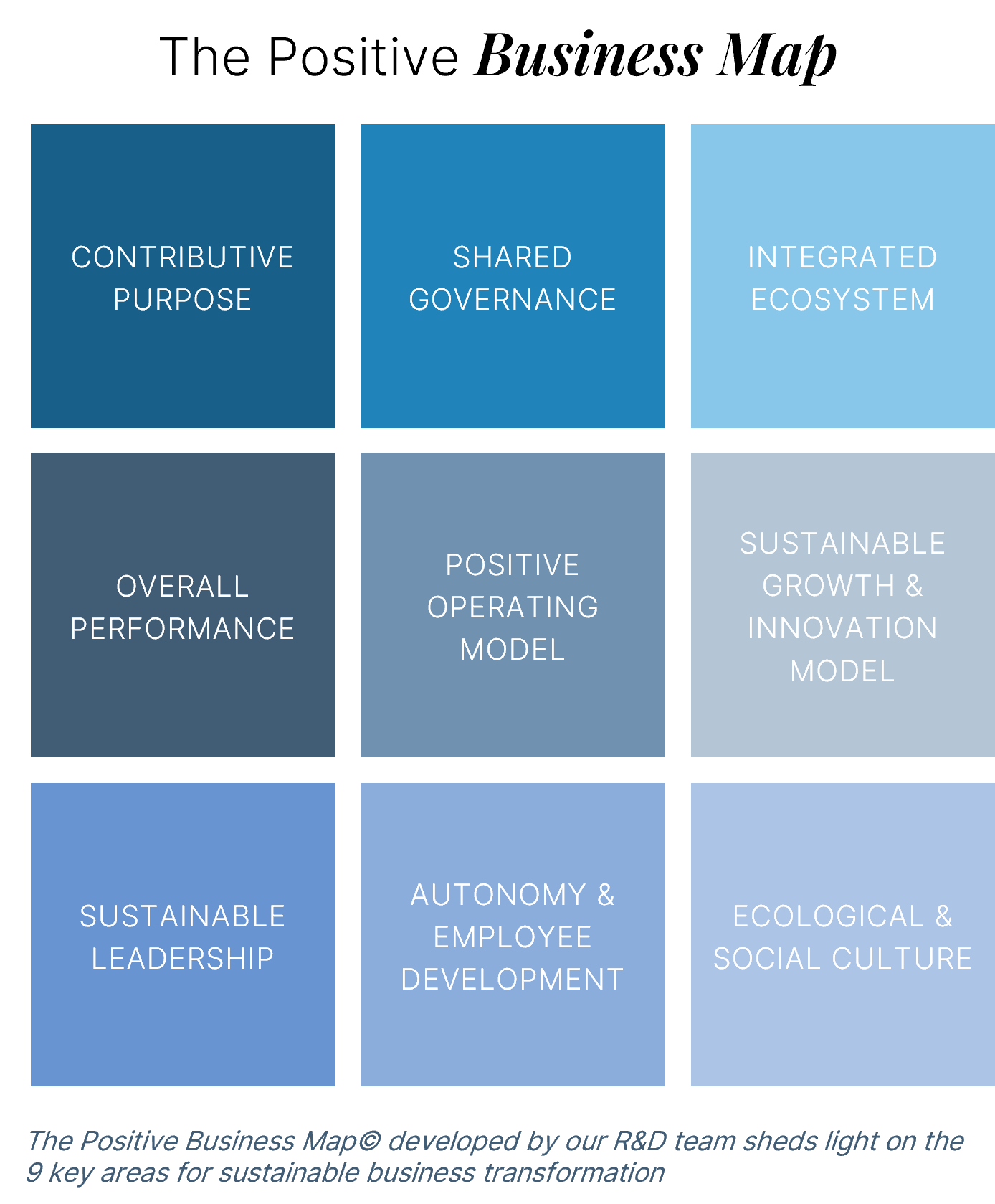
Contributive purpose :
- Define a purpose
- Set concrete commitments and obtain evidence
Shared governance :
- Open up existing governance to stakeholders
- Align the Board of Directors, the Executive Committee and the entire management line behind the purpose
- Embed the purpose into the strategy
Integrated ecosystem:
- Co-manage scarce resources jointly with stakeholders
- Promote cooperation within value chains to preserve their key assets
Global performance:
- Be exemplary in complying with applicable laws
- Integrate non-financial criteria into performance management
- Ensure the ethical use of individual performance management”
Positive-impact operating model:
- Develop eco-design for products and packaging
- Optimize production and transportation resources
- Increase flexibility and modularity of resources”
Sustainable growth & innovation models:
- Promote responsible consumption among customers
- Innovate in products and services (materials, production, societal usefulness, recyclability, etc.)
- Explore and develop alternative and circular business models
Responsible leadership:
- Commit to a personal journey of awareness
- Launch emblematic initiatives and give teams the means to follow
- Be exemplary in the reforms undertaken
Fulfillment at work & autonomy:
- Give more responsibility at the local level
- Anticipate shifts in the world of work and invest in maintaining employee employability
- Continuously improve working conditions
Ecological & social culture:
- Develop individual awareness of the societal issues related to one’s activity
- Promote diversity and the confrontation of viewpoints
- Ensure compliance with standards
Chart your own path of contribution
to a desirable economy.